Residential Garage Door Spring Types
Residential garage door springs are the core of the door's counterbalance system. By storing and releasing energy to offset door weight, they make opening and closing lighter, quieter, and more durable, while reducing wear on the opener and hardware. Two common structures are Torsion Springs (mounted above the door shaft; today’s mainstream residential choice) and Extension Springs (mounted along the horizontal tracks; typical in legacy or space-constrained setups and must be used with a safety cable).
A. Torsion Springs (Mainstream for Residential)
How they work: torsional force at the shaft counterbalances door weight, working with drums and shaft for stable lifting. Left-wind and right-wind springs are typically installed as a matched pair on their respective sides.
Key advantages: precise balance, low noise, stable life, standardized parts.
Best for: homeowners prioritizing quiet operation, predictable service life, and standardized maintenance—ideal for new installs, retrofits, or upgrades.
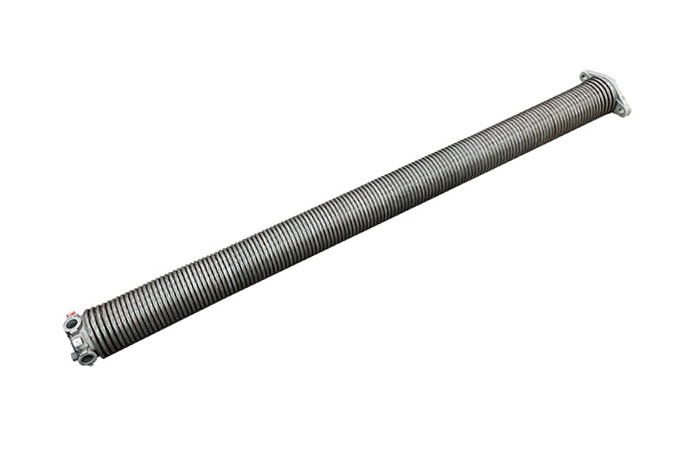
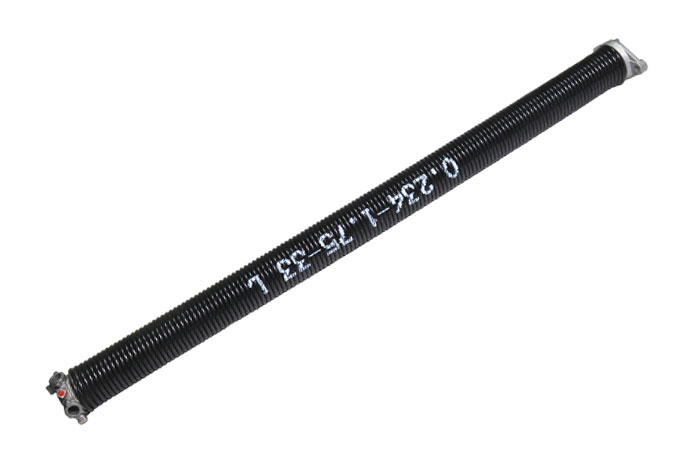
1. Oil-Tempered Torsion Springs
Process & Appearance: oil-tempered wire with heat treatment; darker industrial look.
Performance: stable tension, strong fatigue resistance, excellent value; ideal for average household usage frequency.
Environment: standard residential environments; budget-friendly.
Selection notes: commonly 2" ID cones/shaft system; cycle ratings 16k / 20k / 28k+ available.
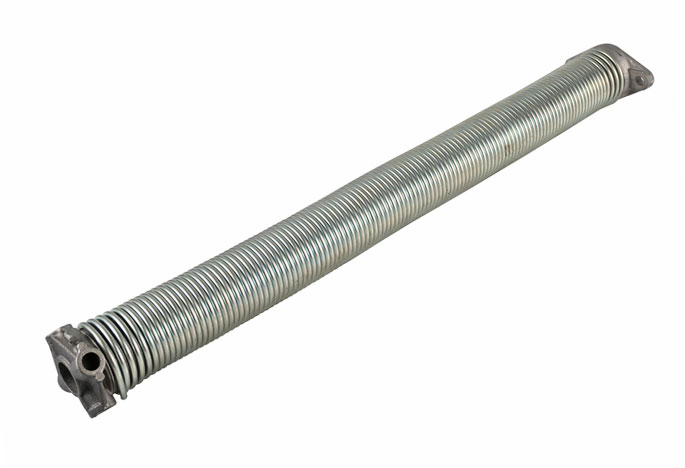
2. Galvanized Torsion Springs
Process & Appearance: zinc-coated surface; brighter, smoother finish.
Performance: enhanced corrosion resistance and cleaner look over time.
Environment: humid, rainy, or coastal homes; semi-exposed garages.
Selection notes: supports 2" ID systems and 16k–28k+ cycles; pairs well visually with black/charcoal hardware.
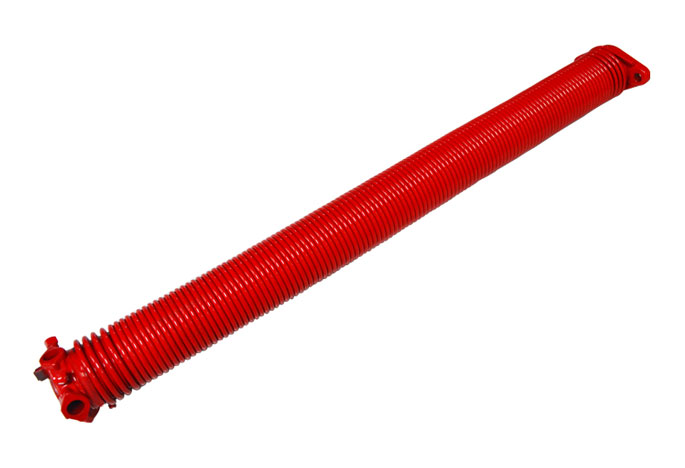
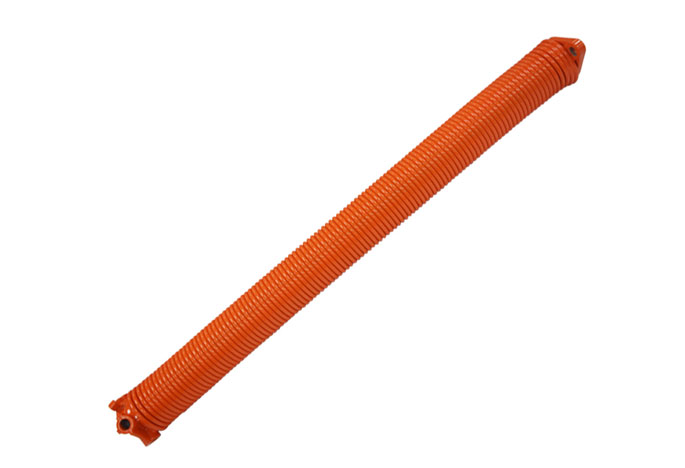
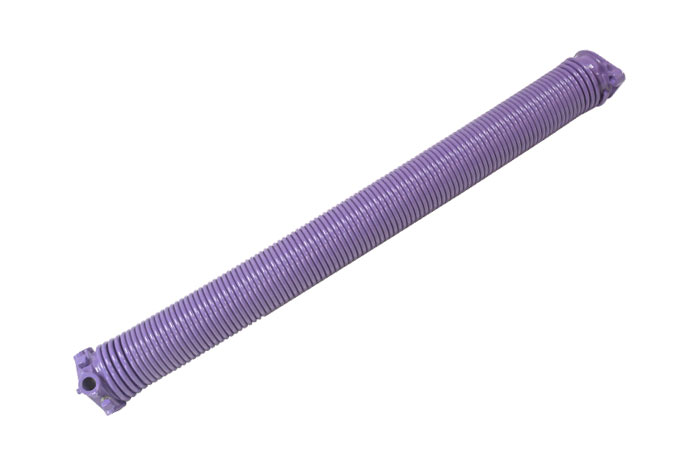
3. Powder-Coated Torsion Springs
Process & Appearance: powder-coated forming a dense protective layer.
Performance: corrosion protection with uniform aesthetics; color can also help identify different specs or winds.
Environment: homes seeking cohesive visual detailing or color-coded service parts.
B. Extension Springs
How they work: springs stretch along both horizontal tracks to counterbalance the door.
Mandatory safety: always use a Safety Cable to prevent recoil if a spring breaks.
Best for: existing residential doors originally built with extension springs, or where headroom/structure does not suit torsion conversion; cost-sensitive repairs.